

 See My Latest Article on HelloNation
What is the basic difference?
Screen printing pushes ink through a prepared mesh screen onto fabric, while heat transfer applies a printed or cut design to the garment using heat and pressure. Both methods can produce durable custom apparel, but they behave differently in appearance, cost, comfort, production speed, and suitability for different types of designs.
For local residents ordering shirts, sweatshirts, uniforms, event apparel, or family clothing, the right choice depends less on which method is “better” and more on the project’s fabric, quantity, artwork, expected use, and desired finish.
How does screen printing work?
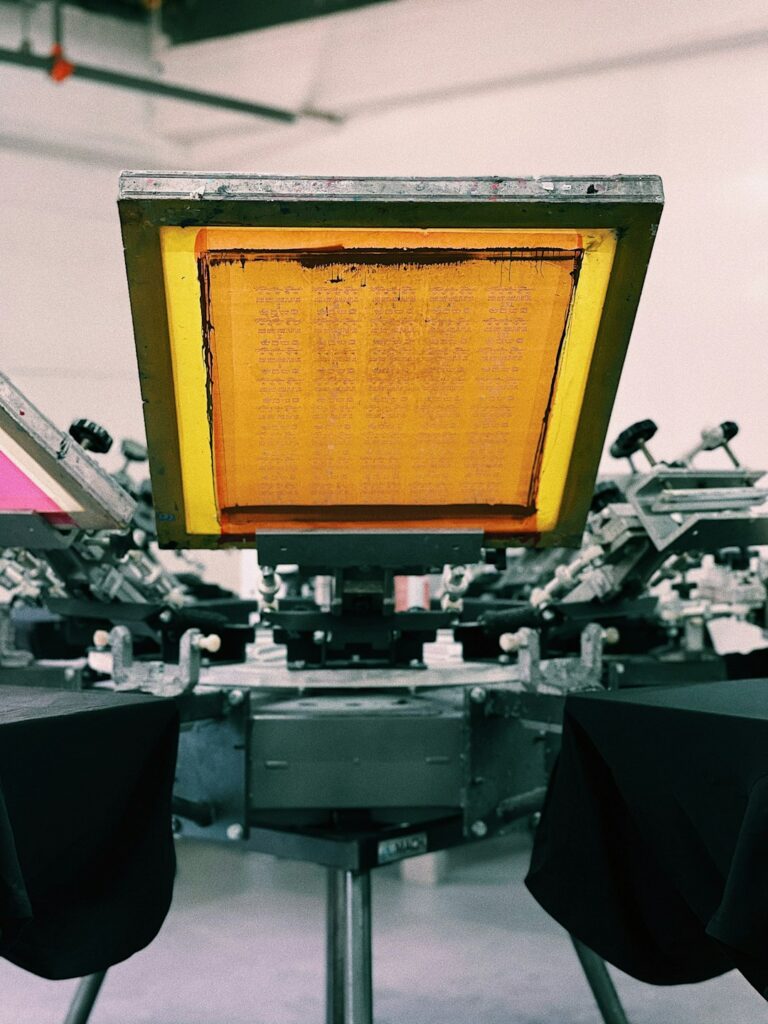
Screen printing creates a separate screen for each ink color in the design. Ink is pulled across the screen with a squeegee, passing through open areas of the stencil and bonding to the fabric. The garment is then cured so the ink becomes firmly attached.
A simple one- or two-color design is a common use for screen printing. Examples include:
- Team names and numbers
- Organization or event shirts
- Workwear with a simple logo
- Bold lettering
- Repeated designs ordered in larger quantities
Screen-printed artwork usually has a slightly raised or textured feel, especially when a substantial layer of ink is used. With proper curing and washing, the design can remain visible through many cycles of wear.
The process becomes more efficient as the order quantity increases because the screens must be prepared whether the order contains a few garments or many. That setup requirement is one reason screen printing is often more practical for larger runs than for a single shirt.
How does heat transfer work?
Heat transfer places artwork on a transfer material first. That material is then applied to the garment with controlled heat and pressure. Depending on the transfer type, the design may be printed digitally, cut from colored material, or produced using a combination of processes.
Heat transfer is often useful for:
- Small orders or one-off garments
- Names and numbers that change from one shirt to another
- Detailed artwork with multiple colors
- Short-run event apparel
- Designs needed on a shorter timeline
- Personalization of individual garments
The finished design may sit more noticeably on top of the fabric than screen-printed ink. Some transfers feel smooth and flexible, while others have a slightly heavier or more plastic-like surface. The result depends on the transfer material, garment fabric, artwork, application temperature, pressure, and curing or cooling instructions.
Which method produces the more durable design?
Neither method is automatically more durable in every situation. A well-made screen print can last for years, but a properly applied heat transfer can also perform well through regular washing and wear.
Durability is affected by several factors:
- Quality of the ink or transfer material
- Correct temperature and pressure
- Proper curing or bonding
- Fabric type
- Washing habits
- Exposure to friction, stretching, sunlight, or heat
Screen printing is often favored for work shirts, team apparel, and frequently washed garments because the ink becomes part of the fabric’s surface rather than remaining as a separate sheet. However, a poorly cured screen print may crack, peel, or fade prematurely.
Heat transfers are more sensitive to application and care. Excessive dryer heat, harsh detergents, ironing directly over the design, or repeated stretching can shorten the life of the graphic. Following the garment’s care instructions helps either method last longer.
Which option feels better to wear?
The feel depends on the design size, ink or transfer thickness, and fabric. A thin screen print may feel relatively soft, while a large, dense print can feel heavier. Heat transfers can have a smooth finish, but the wearer may notice the outline or surface of the applied material.
For lightweight shirts commonly worn during warm, humid Kentucky summers, a large heavy design may feel less comfortable than a smaller or lighter application. Breathability matters more when the design covers much of the chest or back.
Soft garments and flexible fabrics also require attention. A design that feels comfortable on a sturdy cotton shirt may feel stiff on a thin athletic fabric. The transfer or ink must be compatible with the material to reduce cracking, lifting, or unwanted stiffness.
Which method handles detailed or full-color artwork better?
Heat transfer generally offers more flexibility for small, detailed, or photographic artwork. Digital transfer methods can reproduce gradients, fine lines, and many colors without creating a separate screen for each color.
Screen printing can produce excellent detailed artwork, but the setup becomes more involved as colors, shading, and fine elements are added. Some designs may need specialized techniques to reproduce accurately on fabric.

For a simple graphic, screen printing may provide a clean and bold result. For a small batch containing a full-color illustration or personalized names, heat transfer may be more practical. Artwork with very fine details should also be evaluated at the actual printed size, since details that look clear on a screen may not remain readable on a shirt.
Is screen printing cheaper than heat transfer?
For larger quantities, screen printing often becomes more cost-efficient because the setup is spread across many garments. For a small order, heat transfer may avoid some of that setup and provide a more economical approach.
Cost is influenced by more than the printing method. Other factors include:
- Number of garments
- Number of design colors
- Design size and placement
- Garment type and fabric
- Personalization requirements
- Number of print locations
- Time available for production
A large order of identical shirts usually favors screen printing. A small order with different names, numbers, or images may favor heat transfer. Comparing methods based only on the price of one garment can overlook how quantity and setup affect the total project.
Can both methods be used on the same project?
Yes. A project may use different methods for different garments or design elements. For example, a group order could use screen printing for a shared front graphic and heat transfer for individual names or numbers.
Using two methods can be useful when the artwork and personalization have different requirements. It may also help accommodate different fabric types within the same order, such as cotton shirts for general wear and synthetic athletic garments for outdoor activities.
The appearance should be checked carefully when combining methods. Differences in texture, sheen, color saturation, and thickness may be visible if the two applications are placed close together.
What should Lexington residents consider before choosing?
The local climate and seasonal use can influence the decision. Clothing used for summer festivals, outdoor recreation, school activities, and community events may need to remain comfortable in warm conditions. Sweatshirts and heavier garments used during cooler months can generally support a broader range of print weights.
Before selecting a method, consider:
- Is the order for one garment or many?
- Is the artwork simple, detailed, or photographic?
- Will each garment have a different name or number?
- Is the fabric cotton, polyester, a blend, or a performance material?
- Will the clothing be washed frequently?
- Does the design need a soft, low-profile feel?
- Are the garments for casual use, athletic activity, work, or an event?
There is no universal winner. Screen printing is often a strong fit for consistent designs and larger quantities, while heat transfer provides flexibility for small runs, detailed artwork, and personalization. Matching the process to the garment and intended use usually matters more than choosing based on general reputation.